10 March 2026 · Brighton Town Hall
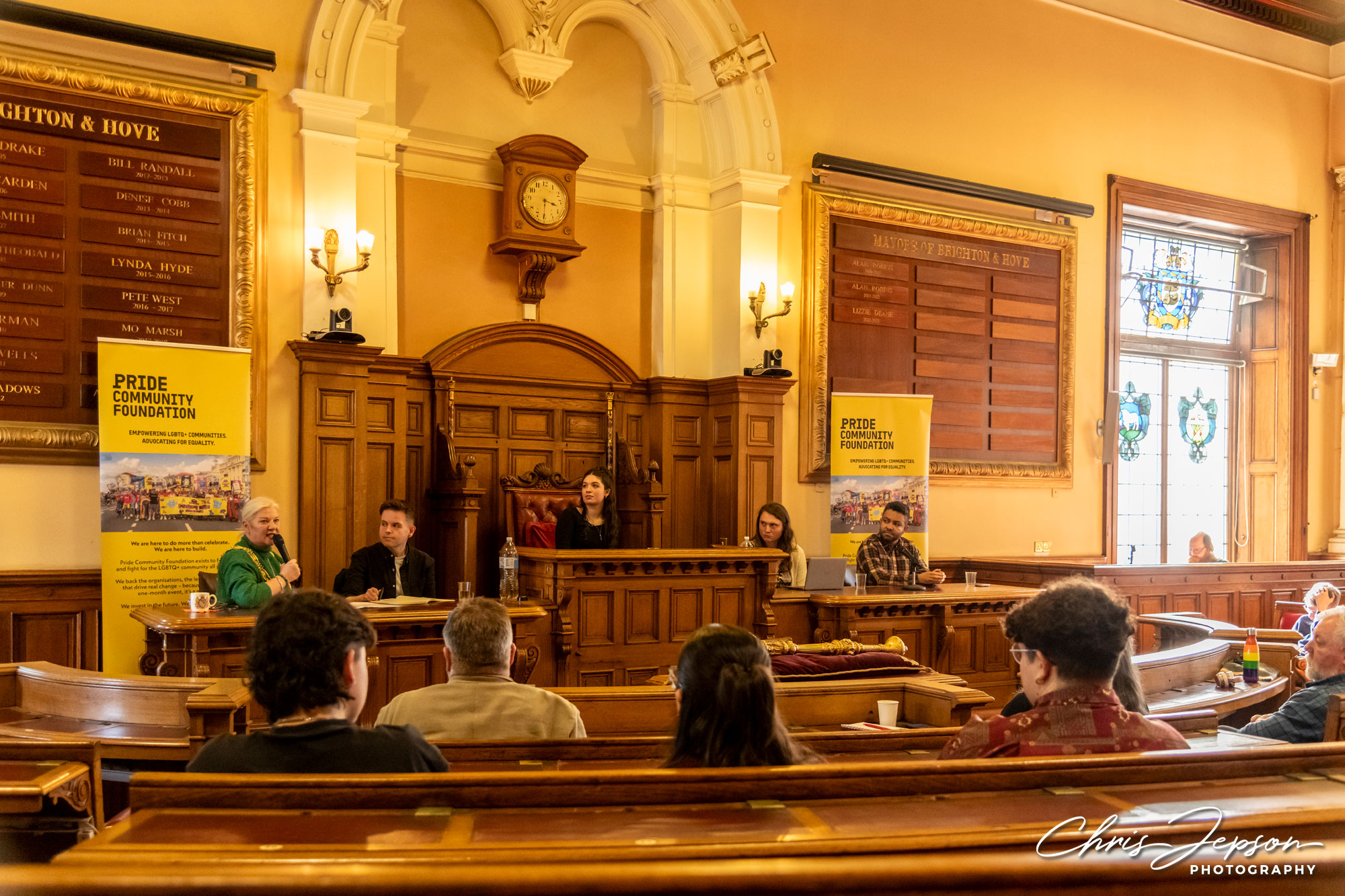
On a Tuesday afternoon in March, Pride Community Foundation welcomed a room full of curious, engaged people into one of Brighton's best-kept secrets: the historic council chamber at Brighton Town Hall. Beneath ornate architecture that has witnessed 171 mayors (the overwhelming majority of them wealthy, straight and male), a rather different conversation unfolded.
Queering Politics was PCF's latest community event: a candid, funny and often deeply moving panel discussion about what it's actually like to be an LGBTQ+ person in local politics. And it did not disappoint.
Chaired by Amelie Marshall, research assistant at PCF and Sussex University social research student, the panel brought together four people with direct experience of local democratic life:
"I was so enraged I said, can I respond to that – and I was told no. So I went, well, I'm doing it anyway."
The afternoon opened with the question that probably resonates with anyone who's ever wondered whether they could do something: what was the moment you thought, I could actually do this?
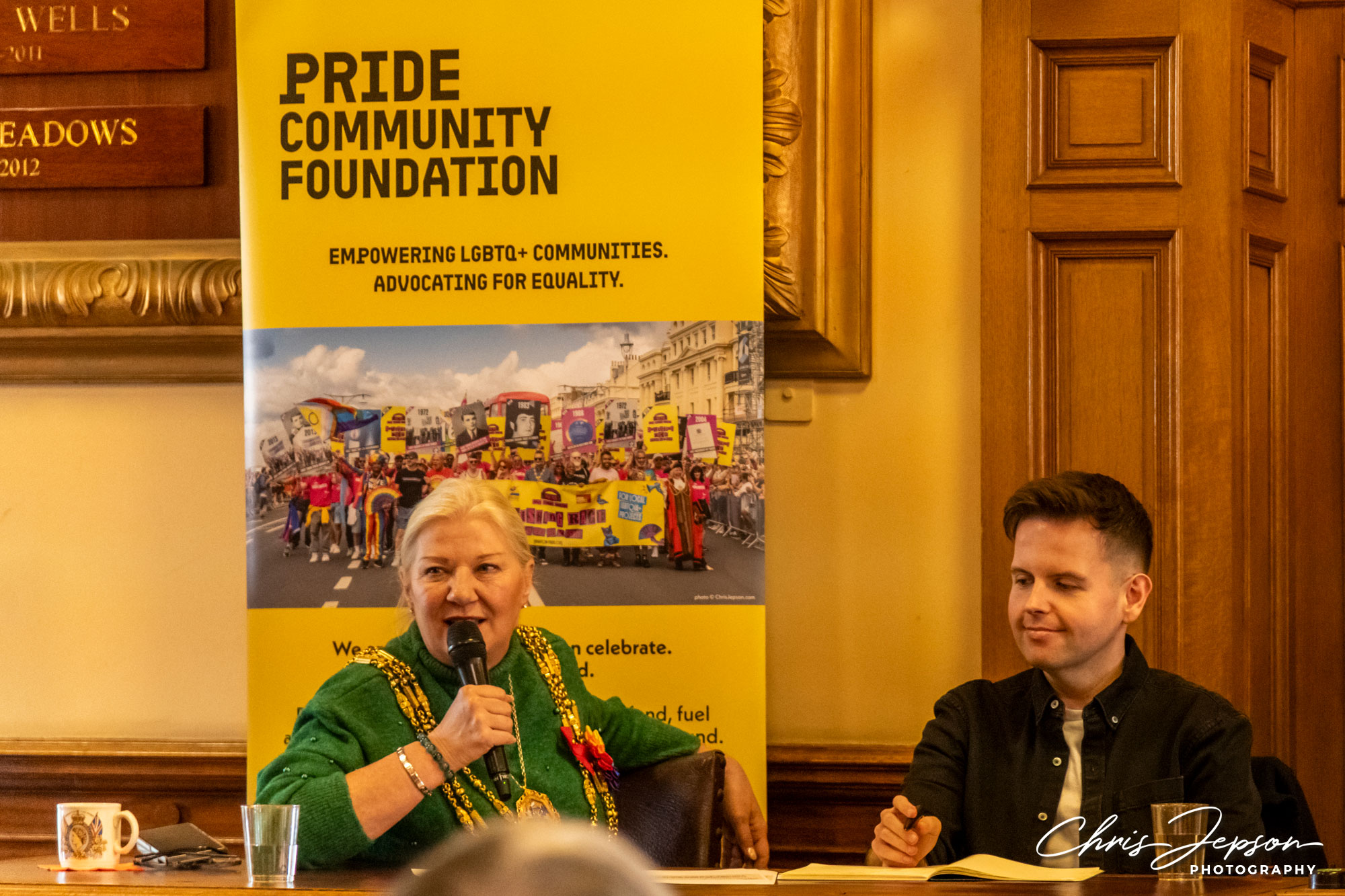
Amanda's answer brought the room to laughter and then quiet solidarity. As a museum professional and single mum of four, she'd gone to Hove Town Hall to present a petition to save a heritage building, only to be smirked at and told her petition was "noted." When she pushed back anyway, she was called into her manager's office the next day and told to drop the campaign or face disciplinary action. She shelved the campaign. And then she joined a political party.
Raphael described standing for the Greens in 2019 (before coming out as trans) as part of a group of young candidates who encouraged each other through it. When she stood again in 2023, she was out as trans and beginning HRT: "basically starting a second puberty at the same time as getting used to public office." Close family had told her not to stand. She is very glad she didn't listen.
David's path was shaped by adversity he carries matter-of-factly: being in court at ten years old, being outed at school at fourteen. "I looked at this and was like, it can't be any worse than that. And I was almost proven right."
Leslie, who moved to Brighton from Berlin in 2020 with, by his own admission, a plan to "just live my best life on the beach," found himself joining the Labour Party at his very first meeting and being asked if he'd stand as a candidate. Labour wasn't popular at the time. There weren't many volunteers. He said yes.
No one on the panel pretended it was easy, and the audience clearly appreciated the honesty.
Amanda described getting a ping on her phone at 10pm on a Saturday: a local forum post complaining that lazy councillors hadn't replied to a message sent ten minutes ago. David reeled off his week: licensing panels two to four times a month, constant casework emails from Whitehawk residents, serving as Labour's political comms lead, branch meetings every Monday, and full council sessions. "I say yes to too many things," he admitted cheerfully. "I should not have said yes at the beginning."
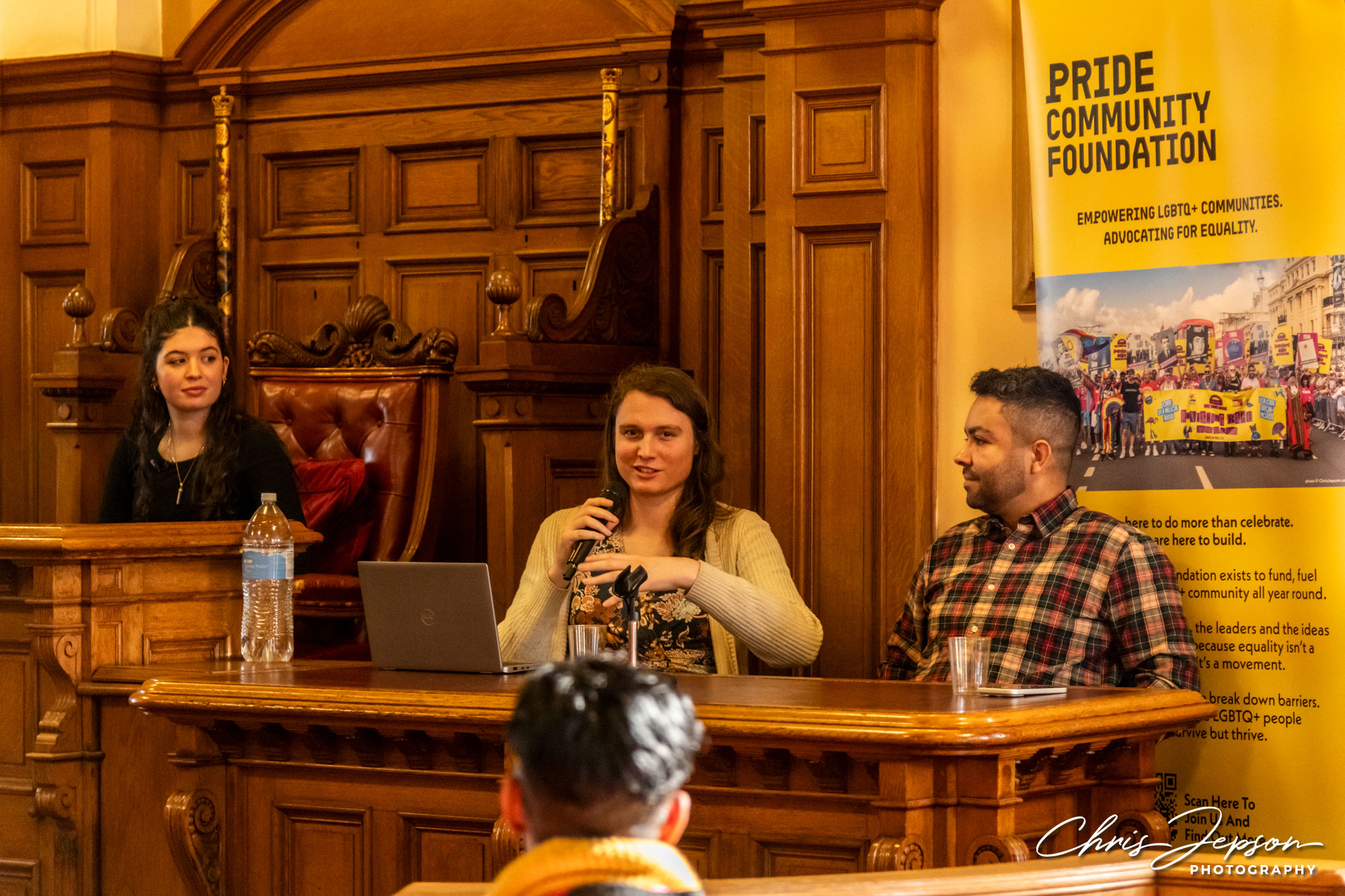
Raphael talked about the volume of email surges around particular votes (school admissions, for instance) and the absence of the kind of staffing support an MP would have. Leslie described the whiplash of moving from startup flat hierarchies to a council where decisions made two years ago might not be implemented for another two years. "Learning what a maze Hove Town Hall is," he said, to knowing laughter. "You get lost there all the time."
And then there's the pay: £14,000 a year basic allowance, taxed, for what is in practice far more than a part-time job. Leslie, now speaking freely as a former councillor, said what sitting members cannot: "They are not getting paid enough. Full stop." The constraint is structural and painful. Every pound allocated to increase councillor pay is a pound not going to services. But the result is that local democracy systematically excludes people who cannot afford to do it.
When Amelie asked how being openly LGBTQ+ had shaped their roles, the answers were thoughtful and, at times, genuinely moving.
David said simply: "I love the fact that I am a gay man. I allowed myself to be a bit of a weirdo as a kid, and I don't think I would have got that if I was straight." His interest in licensing grew directly from caring about queer spaces and nightlife. His work on HIV prevention came with what he called "a nice little invite to things just by being gay." But he was also clear about responsibility: "The white gay guys are kind of all right, you know what I mean? It's our turn to make sure that other people are getting that support as well."
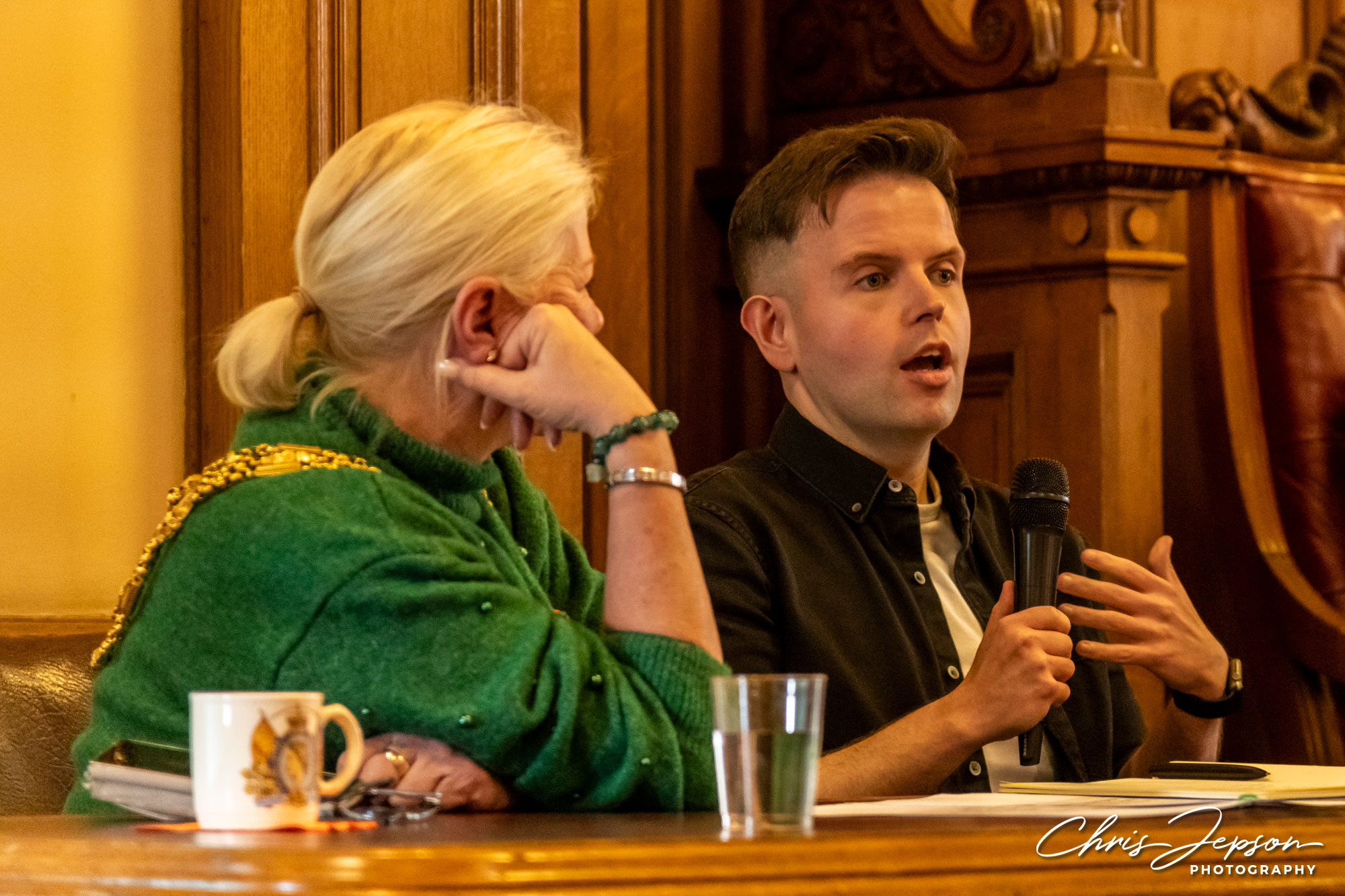
Raphael spoke candidly about the complexity of being the council's first openly trans member: the press coverage that emphasises that identity, the reality that she is elected to represent Round Hill ward rather than all trans people in the city, and the experience of working in spaces where some colleagues "have difficulty being around somebody who is trans." She described navigating conservative members of the East Sussex Fire Authority with patience and a deliberate separation between her councillor self and her personal self.
Leslie reflected on arriving in Brighton still ramping up his English, walking into rooms where he was often the only Black person, and nevertheless pushing through. "I know representation is not everything," he said. "The last government really proved that point. But representation is important."
Amanda, as mayor, is non-political, a distinction that caught her out hilariously the previous Sunday when she filmed a video for International Women's Day and David had to point out that she couldn't send it to the Labour group in her mayoral capacity. She ran back to the beach, grabbed a friend to film, and did it again.
The panel was asked what they'd achieved that wouldn't have happened without them being in the room.
David pointed to a progressive licensing policy he pushed through, focused on protecting businesses while keeping people safe, that licensing professionals told him they hadn't thought was possible. He's also advocated for funding for projects he cares about, including work on HIV prevention and supporting the Sussex Beacon.
Raphael, speaking from opposition, described using her personal experience of being a trans child to fight for Brighton's Trans Inclusion School Toolkit at a moment when it faces its greatest political pressure. "It makes it harder for people campaigning against it to discredit it," she said quietly, "because they don't have the same direct experience to draw upon."
Leslie highlighted two wins: the Diverse Council Declaration, which commits the council to actively supporting diverse candidates, and a successful fight to protect the community safety team from budget cuts. "I know this is more of a 'let's keep the lights on' win," he said, "but that's the reality of local government."
Amanda, who took a presentation about menopause to a regional union conference before menopause was "fashionable" and watched a room of women rush to tell her their husbands had called them lazy, described how that moment eventually fed into party policy at a national level. "I lit the fire," she said. "And I'm immensely proud of that."
The event drew questions from the audience that ranged from the practical to the deeply personal. One attendee, a trans person, asked directly about personal safety. Raphael was honest: there are security assessments, police support, guidance from the Local Government Association, and protocols for surgeries. But she also named what it is: "a way that people who are reactionary try to stop people from diverse backgrounds from standing for things."
Someone raised the adversarial nature of politics. The panel pushed back, gently but firmly, not as naivety but as experience. David: "I respect the vast majority of my colleagues. We're not walking out going, oh, I hate you." Leslie pointed out that punchy rhetoric in the chamber is directed at policy and party, almost never at the people sitting there.
And as the afternoon wound down, the room heard something that cut through all the complexity. Amanda, who gave up her council job to stand, who earns £19,000 a year, who manages a health condition alongside everything else, and who sometimes has one free hour on a Saturday afternoon for her daughter: "What makes me happy is fighting for change. You do it for completely different reasons, and that beats the money every day."
The 2027 local elections are coming. Brighton calls itself a Rainbow City, but as Leslie noted, it does not yet have enough LGBTQ+ councillors to match that identity. Events like Queering Politics exist precisely to close that gap: to give people a real picture of what the role involves, to demystify the chamber, and to make the case that your background, your identity, and your lived experience are not obstacles. They're the point.
If you weren't there, we hope this gives you a sense of what the room felt like. And if something in this piece has made you think maybe I could do this, we'd love to hear from you.
Queering Politics is a series of events organised by Pride Community Foundation. A short film from the event is available above. PCF funds, researches, and advocates for LGBTQ+ issues in the UK all year round, not just during Pride Month.